A customer likes your product, agrees with the price and is ready to pay. Then you mention the delivery fee—and the sale suddenly goes quiet.
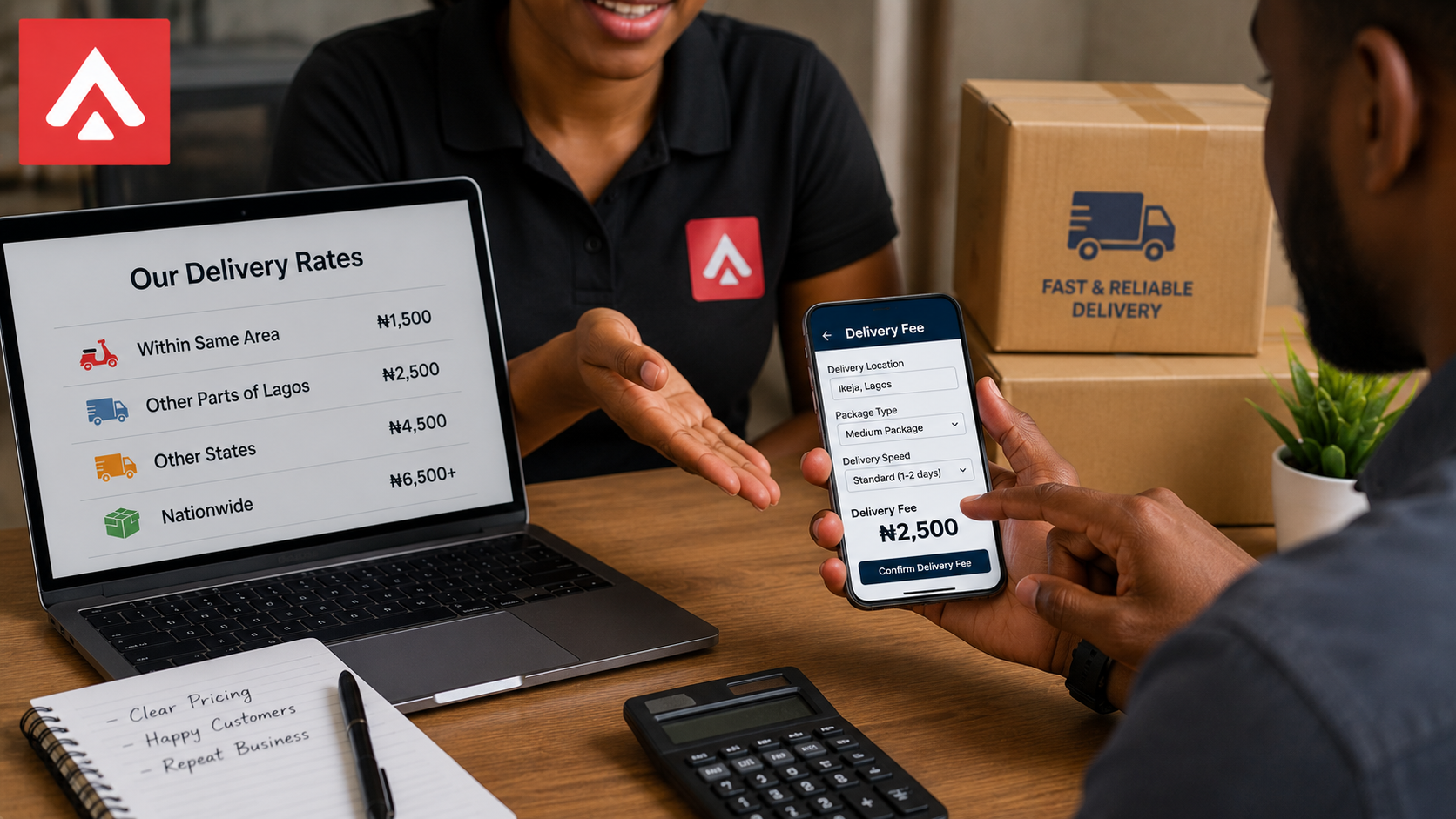
This happens to many Nigerian businesses. The problem is not always that the delivery fee is too high. Sometimes, the customer simply does not understand how the amount was calculated, why it changed or what they are getting for it.
Delivery charges can influence whether a customer completes an order, abandons it or buys from a competitor. The goal is not to make every delivery cheap. It is to create a pricing system that is clear, fair and sustainable for your business.
Services You May Like
Here is how to charge for delivery without damaging customer trust or reducing your profit.
Understand What the Delivery Fee Covers
Before setting a delivery price, know what the fee actually includes.
Delivery costs may depend on:
1. Pickup and drop-off distance
2. Package size and weight
3. Urgency
4. Traffic conditions
5. Vehicle type
6. Number of delivery stops
7. Waiting time
8. Redelivery risk
A small parcel going across the same neighbourhood should not necessarily cost the same as a large package travelling to another part of the city.
Understanding these factors helps you explain the price confidently instead of giving customers random figures.
When your parcel is ready, you can book a delivery through AllDeliveries and choose a suitable option for the package and destination.
Do Not Hide Delivery Charges Until Checkout
Unexpected delivery fees are one of the fastest ways to lose a customer.
Imagine advertising a product for ₦15,000, only to tell the customer at the last minute that delivery costs another ₦6,000. Even when the fee is reasonable, the customer may feel misled.
Explain delivery charges early. You can state that the exact amount depends on the customer’s location, then confirm it before payment.
Clear pricing is part of what customers really expect from delivery services in Nigeria.
Customers are more likely to accept a charge when they understand it before committing to the purchase.
Use Delivery Zones Where Possible
Creating simple delivery zones can make pricing easier.
For example, you may group locations into:
1. Nearby delivery areas
2. Other parts of the city
3. Surrounding states
4, Nationwide destinations
This gives customers a general idea of what to expect and saves your team from calculating every order from scratch.
However, make it clear that unusually large, heavy or urgent packages may attract a different fee.
A structured system also reduces arguments because customers can see that pricing is based on location and package requirements—not personal judgement.
Avoid Absorbing Every Delivery Cost
Offering free or heavily subsidised delivery can attract customers, but it can also reduce your profit.
If the delivery fee is ₦4,000 and your profit on the product is only ₦2,500, covering the entire cost means losing money on the sale.
Instead, consider smarter options:
1. Free delivery above a minimum order value
2. Discounted delivery for repeat customers
3. Limited free-delivery promotions
4. Shared delivery cost
5. Free delivery within selected locations
Businesses looking for better cost control should read how small businesses can reduce logistics costs in Nigeria.
Explain Why Reliable Delivery Has Value
Some customers compare only the amount charged, not the service behind it.
A cheaper option may involve delays, poor communication or weak package handling. A reliable delivery service protects the customer’s order and saves both sides unnecessary stress.
Explain that the fee supports safe handling, timely delivery and professional service. This is especially important for urgent, expensive or fragile products.
Our guide on how to choose the right delivery service for your business explains why price should not be the only factor.
Confirm the Fee Before Dispatch
Never send a package before the customer agrees to the delivery charge.
Confirm:
1. The final delivery fee
2. Who will pay it
3. The expected delivery time
4. Whether waiting or redelivery may attract an extra charge
This prevents arguments when the rider arrives.
If the customer changes the delivery address after dispatch, explain any increase before continuing the journey. Clear communication helps prevent the delivery mistakes that cost Nigerian businesses customers.
Make Delivery Pricing Part of Your Customer Service
Delivery pricing should feel organised, not confusing.
Set clear rules, communicate early and avoid surprising customers after they have already committed to the order. At the same time, do not undercharge so much that every sale becomes unprofitable.
A fair delivery fee protects your business while giving customers a smooth buying experience.
You can download the AllDeliveries mobile app to access delivery services conveniently from your phone.
For more practical logistics and business-growth advice, visit the AllDeliveries Blog.
Frequently Asked Questions
Should delivery fees be included in the product price?
They can be included, charged separately or partly subsidised. The best choice depends on the product price, location and profit margin.
Why do delivery fees vary by location?
Distance, traffic, fuel use, travel time and delivery difficulty can affect the cost.
Should businesses offer free delivery?
Free delivery can work as a promotion or for orders above a minimum value, but the business should calculate the cost carefully.
What happens if a customer changes the address?
The fee may increase if the new destination is farther away. The customer should be informed before the delivery continues.
How can businesses avoid arguments over delivery fees?
Explain the fee early, confirm it before dispatch and state any conditions that may lead to extra charges.
Comments
No comments yet. Be the first to comment.