Running a small business in Nigeria involves several expenses. Business owners must pay for stock, packaging, advertising, electricity, internet access, staff salaries and transportation.
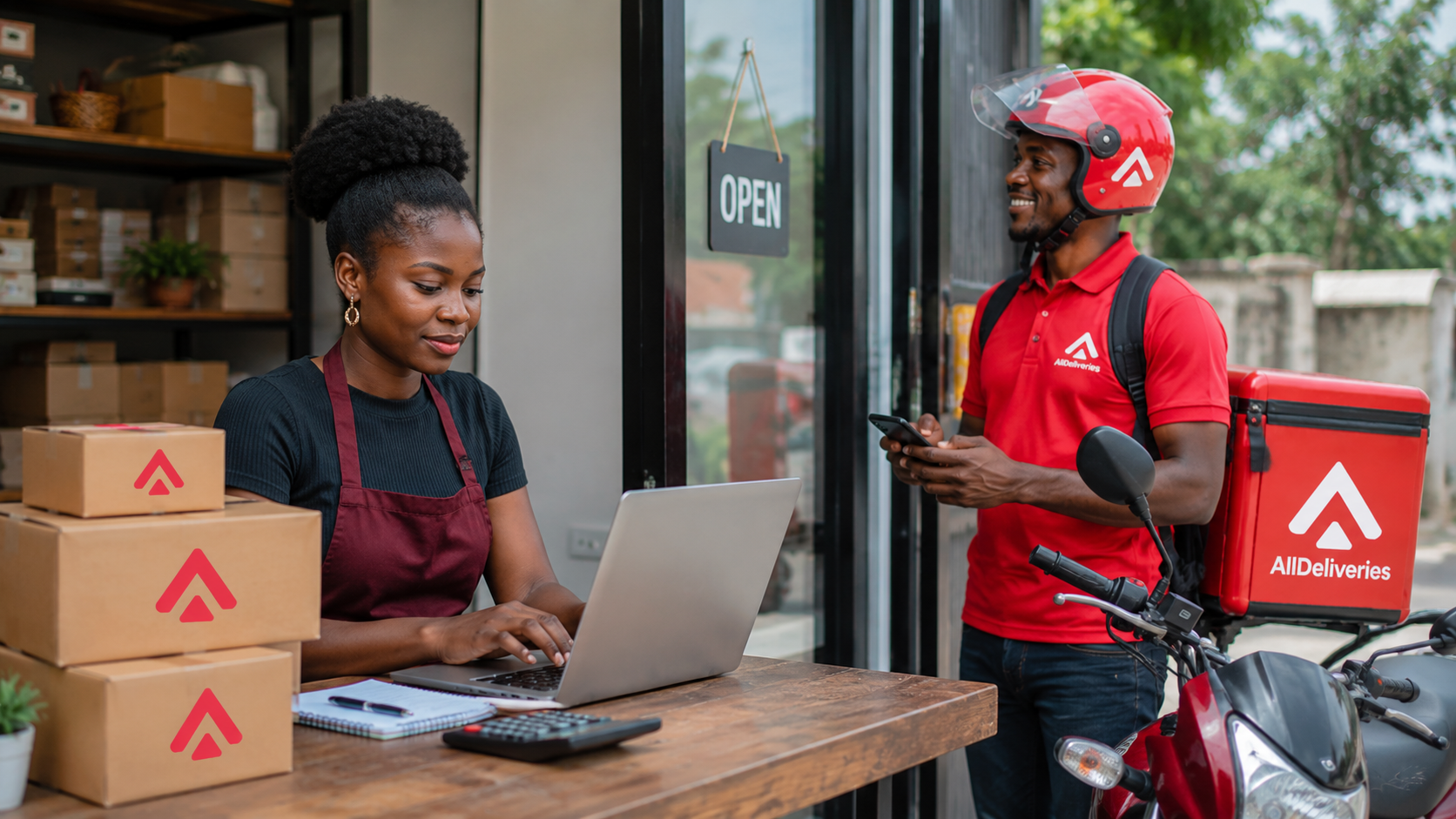
For businesses that deliver products to customers, logistics can quickly become one of the biggest operating costs. A business may make a reasonable profit from a product but lose a large part of it through expensive pickups, failed delivery attempts, poor planning or repeated trips.
Reducing logistics costs does not mean using unreliable riders or giving customers a poor delivery experience. It means organising deliveries properly, preventing avoidable mistakes and choosing a logistics system that supports the business.
Services You May Like
Small businesses that need to send products, documents or other suitable items can book a delivery through AllDeliveries instead of maintaining an expensive in-house delivery fleet.
Why Logistics Costs Matter to Small Businesses
Large companies may have enough money to maintain warehouses, delivery vans, motorcycles and permanent logistics employees.
Most small businesses do not have the same financial capacity.
An online fashion vendor, local pharmacy, restaurant, supermarket or social media seller may operate with a limited budget. When delivery expenses rise, the business may be forced to increase product prices or accept a lower profit.
Common logistics expenses include:
1. Dispatch rider charges
2. Fuel costs
3. Vehicle maintenance
4. Packaging materials
5. Failed delivery expenses
6. Return delivery charges
7. Storage costs
8. Staff transportation
9. Emergency pickups
10. Multiple trips to the same location
When these costs are not properly controlled, they can affect the financial health of the business.
Avoid Employing a Permanent Rider Too Early
Some business owners believe they must employ a full-time dispatch rider before they can offer professional delivery.
This may not be necessary, especially when the business receives only a few orders each day.
A permanent rider may require:
1. A monthly salary
2. Motorcycle purchase or rental
3. Fuel
4. Maintenance
5. Insurance
6. Registration
7. Safety equipment
8. Repairs
9. Allowances
These expenses continue even when the business has no delivery orders.
A smaller business may reduce costs by requesting a rider only when there is an item to send. This allows the business to pay for delivery based on actual demand.
As the company grows and receives a steady number of daily orders, the owner can then decide whether employing a permanent rider is financially reasonable.
Prepare Orders Before Requesting a Rider
Poor preparation can make delivery more expensive.
A business should not wait until the rider arrives before searching for the product, confirming payment or looking for packaging materials.
Keeping a rider waiting can cause delays, additional charges or missed delivery opportunities.
Before requesting a pickup, confirm that:
1. The product is available
2. Payment has been received
3. The correct item has been selected
4. The package is properly sealed
5. The customer’s address is complete
6. The customer is available
7. The delivery charge has been agreed upon
Proper preparation allows the pickup process to move quickly and efficiently.
Encourage Customers to Place Orders Early
Last-minute delivery requests can be more difficult and expensive to manage.
A customer who places an order late in the evening may still expect the product to arrive immediately. The business may then have to search urgently for an available rider or pay more for an emergency delivery.
Businesses can reduce this problem by setting a clear daily order deadline.
For example:
1. Orders confirmed before noon may qualify for same-day delivery.
2. Orders placed after the deadline may be delivered the following day.
3. Emergency delivery may attract an additional charge.
This policy helps the business organise orders properly and avoid unnecessary pressure.
Fast delivery remains valuable, but business owners should first understand why same-day delivery is becoming essential for Nigerian businesses before making promises they cannot consistently fulfil.
Group Deliveries Going to Similar Locations
Businesses that receive several orders can reduce costs by organising deliveries according to location.
For example, when multiple customers live within the same area, the business may arrange the orders together rather than treating every package as a separate urgent delivery.
Orders can be grouped based on:
1. Delivery area
2. Pickup time
3. Package type
4. Customer availability
5. Delivery urgency
This approach can be useful for bakeries, food vendors, pharmacies, supermarkets and ecommerce businesses that handle several orders each day.
Every package should be clearly labelled to prevent mix-ups.
Use the Correct Packaging
Packaging affects both the safety and cost of delivery.
A package that is unnecessarily large may take up more space and could cost more to transport. Weak packaging can also cause damage, leakage or customer complaints.
Businesses should choose packaging that suits the product.
Examples include:
1. Padded envelopes for small accessories
2. Sealed containers for food
3. Bubble wrap for fragile products
4. Strong cartons for heavier items
5. Waterproof packaging for sensitive materials
6. Tamper-resistant packaging for medicines
7. Labelled bags for multiple orders
The aim is to protect the product without using excessive packaging materials.
Buying packaging materials in bulk may also be cheaper than purchasing them one at a time.
Confirm the Customer’s Address Properly
Incorrect delivery information is one of the main causes of wasted logistics expenses.
A rider may travel to the wrong area because the customer provided an incomplete address or unclear landmark. The business may then have to pay for additional movement or a second delivery attempt.
Before dispatching an order, collect:
1. Customer’s full name
2. Active telephone number
3. Complete delivery address
4. Nearby landmark
5. Area or local government
6. Alternative contact number where necessary
7. Preferred delivery time
The seller should send the address back to the customer for confirmation before booking the delivery.
Confirm That the Customer Is Available
A successful delivery requires the recipient to be reachable.
When the customer does not answer calls or is unavailable at the delivery location, the rider may have to wait, return the package or make another trip.
This creates additional costs for the business.
Before sending the order, ask the customer to confirm that they will be available. When the customer cannot receive it personally, they should provide the name and telephone number of someone who can collect it.
The business should also inform the customer when the package has been dispatched.
Reduce Failed Delivery Attempts
A failed delivery occurs when a package cannot be successfully handed over to the recipient.
Common causes include:
1. Incorrect address
2. Unreachable customer
3. Customer refusal
4. Wrong product
5. Unexpected delivery charge
6. Late arrival
7. Damaged package
8. Payment disagreement
Failed deliveries can be expensive because the business may pay for both the original journey and the return trip.
To prevent this, sellers should confirm product details, delivery charges, payment arrangements and customer availability before dispatch.
For payment-on-delivery orders, it may be useful to reconfirm the order before requesting a rider.
Explain Delivery Charges Clearly
Some businesses lose money because they do not discuss delivery costs properly with customers.
A seller may promise free delivery without calculating the actual expense. In other cases, the customer may refuse the package after discovering an unexpected delivery fee.
The delivery charge should be communicated before the order is confirmed.
Businesses may choose to:
1. Ask the customer to pay the full delivery fee
2. Include the delivery cost in the product price
3. Offer free delivery above a minimum order value
4. Subsidise part of the delivery cost
5. Offer free delivery during special promotions
6. Charge according to location
Whatever method is used, the customer should understand the arrangement before the package is dispatched.
Avoid Offering Free Delivery on Every Order
Free delivery can attract customers, but it must be used carefully.
When a business offers free delivery on every small order, the delivery expense may consume the entire profit.
For example, offering free delivery on a low-priced product may not make financial sense when the delivery costs almost as much as the item.
A better approach may be to offer free or discounted delivery when:
1. The customer spends above a certain amount
2. Several products are purchased together
3. The customer is located nearby
4. The business is running a limited promotion
5. The order has a strong profit margin
6. Multiple customers are being served in the same area
The business should calculate the cost before advertising free delivery.
Use Technology to Organise Deliveries
Managing deliveries through scattered phone calls, WhatsApp messages and handwritten notes can cause confusion.
A business may forget a customer’s address, send the wrong package or request multiple riders unnecessarily.
Using a delivery platform can make the process more organised.
Business owners and customers can download the AllDeliveries mobile app to access delivery services more conveniently.
A structured delivery process can help businesses keep track of:
1. Pickup details
2. Customer information
3. Delivery locations
4. Delivery times
5. Completed orders
6. Failed deliveries
7. Regular customers
Better organisation reduces avoidable mistakes and repeated expenses.
Include Delivery Costs in Product Pricing
Every business should understand the complete cost of selling a product.
The selling price should not be calculated using only the purchase price of the item. The business must also consider packaging, payment charges, advertising, storage and logistics support.
For example, when a product costs ₦8,000 to purchase and the seller adds only a small profit, offering free delivery may turn the order into a loss.
Business owners should calculate:
1. Cost of the product
2. Packaging cost
3. Payment processing cost
4. Delivery contribution
5. Marketing cost
6. Expected profit
This helps the business create a sustainable pricing system.
Negotiate Better Pickup Arrangements With Suppliers
Some small businesses spend too much money collecting stock from suppliers.
Before placing an order, ask whether the supplier:
1. Offers delivery
2. Has a pickup point nearby
3. Can combine several purchases
4. Provides discounted bulk delivery
5. Can send products directly to the customer
6. Has scheduled delivery days
Combining supplier orders can reduce the number of trips the business makes.
Instead of collecting small quantities several times a week, the business may save money by purchasing planned quantities at once.
Maintain Accurate Stock Records
A business may waste delivery money by accepting orders for products that are no longer available.
After the customer pays, the seller may need to travel urgently to another supplier or refund the customer.
Accurate inventory records help prevent this problem.
Business owners should know:
1. Products currently available
2. Quantity remaining
3. Items that require restocking
4. Fast-moving products
6. Slow-moving products
7. Orders already reserved for customers
Before promising delivery, confirm that the item is physically available.
Avoid Sending the Wrong Product
Dispatching the wrong item creates unnecessary delivery expenses.
The business may have to collect the incorrect product and send the correct one. This means paying for multiple trips because of a preventable mistake.
Before sealing the package, check:
1. Product name
2. Size
3. Colour
4. Quantity
5. Customer’s name
6. Delivery address
7. Payment status
Businesses handling many daily orders should attach printed or clearly written labels to every package.
Choose a Reliable Delivery Service
The cheapest delivery option is not always the most affordable in the long run.
An unreliable rider may delay the order, mishandle the package or fail to communicate with the customer. The business may then spend more money correcting the problem.
When choosing a delivery service, consider:
1. Ease of booking
2. Delivery coverage
3. Reliability
4. Communication
5. Handling of packages
6. Convenience
7. Support for businesses and individuals
8. Ability to manage urgent deliveries
A dependable service can reduce failed deliveries, customer complaints and repeated trips.
Businesses can request a pickup through AllDeliveries whenever they need to move products, parcels or documents.
Track Monthly Delivery Expenses
Many small business owners do not know how much they spend on logistics every month.
They pay individual delivery charges without recording the total amount. At the end of the month, they cannot determine whether logistics expenses are increasing or reducing.
Keep a simple record containing:
1. Date
2. Customer
3. Pickup location
4. Delivery location
5. Delivery charge
6. Person responsible for payment
7. Delivery status
8. Return cost, where applicable
Reviewing this information can reveal expensive locations, frequent failed deliveries and areas where the business can improve.
Business owners can also find more practical logistics and business growth guides on the AllDeliveries blog.
Set a Monthly Logistics Budget
A business should have a monthly logistics budget.
The budget may cover:
1. Customer deliveries
2. Supplier pickups
3. Packaging
4. Returned orders
5. Emergency deliveries
6. Staff transportation
7. Delivery promotions
Setting a budget helps prevent uncontrolled spending.
When the business regularly exceeds the budget, the owner should investigate the cause. The problem may be frequent failed deliveries, poor planning or too many emergency bookings.
Review the Delivery Process Regularly
A delivery system that worked when the business received five weekly orders may not work when it begins receiving twenty orders each day.
Business owners should review their logistics process as the company grows.
Important questions include:
1. Are customers receiving orders on time?
2. Are delivery costs increasing?
3. How many deliveries fail each month?
4. Which locations are most expensive?
5. Are packages prepared before pickup?
6. Are customers informed about charges?
7. Is the current delivery method still suitable?
8. Are there repeated complaints?
Regular reviews allow the business to correct small problems before they become expensive.
Common Logistics Mistakes Small Businesses Should Avoid
Small businesses often increase their logistics expenses through avoidable mistakes.
These include:
1. Booking riders before packages are ready
2. Sending incomplete customer addresses
3. Offering free delivery without calculating costs
4. Accepting unconfirmed payment-on-delivery orders
5. Failing to record delivery expenses
6. Using oversized packaging
7. Dispatching the wrong product
8. Ignoring customer availability
9. Making repeated trips to suppliers
10. Choosing riders based only on price
11. Promising unrealistic delivery times
Correcting these mistakes can reduce expenses without affecting service quality.
Final Advice for Small Business Owners
Logistics does not have to consume most of a small business’s profit.
Business owners can reduce costs by preparing orders early, confirming customer details, grouping suitable deliveries, using appropriate packaging and preventing failed delivery attempts.
They should also record logistics expenses, set a delivery budget and review their system regularly.
The goal is not simply to find the cheapest rider. The goal is to create a reliable and affordable delivery process that protects the business and gives customers a good experience.
Whether you run an online shop, restaurant, pharmacy, supermarket, office or social media business, you can book a delivery with AllDeliveries whenever you need a convenient pickup.
Frequently Asked Questions
How can a small business reduce delivery costs?
A small business can reduce costs by planning orders, confirming addresses, grouping suitable deliveries, avoiding failed attempts and requesting riders only when needed.
Should a small business employ a permanent dispatch rider?
It depends on the number of daily orders. Businesses with only a few deliveries may save money by using an on-demand delivery service.
Is free delivery good for small businesses?
Free delivery can attract customers, but the cost must be calculated carefully. It may be better to offer it only for large orders, nearby locations or limited promotions.
Who should pay the delivery charge?
The customer, business or both may pay the delivery fee. The arrangement should be explained before the order is confirmed.
How can failed deliveries be prevented?
Confirm the customer’s address, telephone number, availability, order details and payment arrangement before dispatching the package.
Can AllDeliveries be used for business orders?
Yes. Businesses and individuals can use AllDeliveries to request suitable parcel, product and document deliveries.
Comments
No comments yet. Be the first to comment.