Sending fragile items can be stressful for both businesses and individuals.
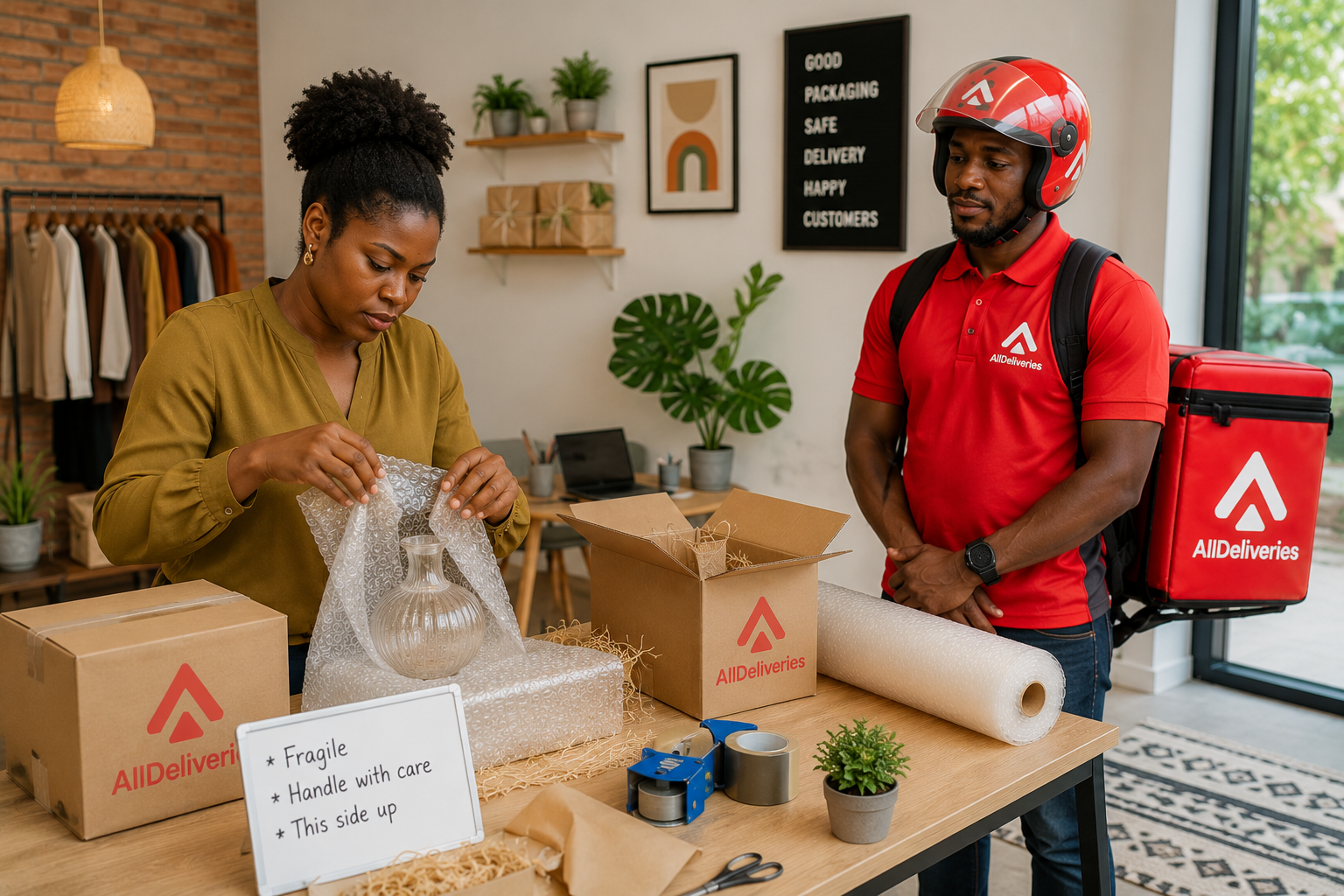
Glassware, electronics, laboratory equipment, ceramics, perfumes, bottles, picture frames and other delicate products can easily break when they are not packaged correctly. Even when the rider handles a parcel carefully, poor packaging can still cause damage during movement.
For businesses, a damaged item can lead to refunds, replacement costs, customer complaints and negative reviews. For individuals, it can mean losing something valuable or difficult to replace.
Services You May Like
This is why proper packaging is an important part of every delivery process.
Businesses and individuals who need to send suitable fragile items can book a delivery through AllDeliveries after preparing the parcel securely.
Why Fragile Items Need Special Packaging
Fragile items are more vulnerable to pressure, impact, vibration and sudden movement.
During delivery, a parcel may be:
1. Lifted several times
2. Placed inside a delivery box
3. Moved through traffic
4. Exposed to road vibration
5. Carried up or down stairs
6. Positioned beside other packages
Even a short journey can damage an item that is not properly protected.
Packaging should therefore do more than make the parcel look neat. It should absorb shock, prevent movement and protect the item from external pressure.
Common Fragile Items That Require Extra Care
Many everyday products need careful packaging before delivery.
Examples include:
1. Glass bottles
2. Perfume containers
3. Laboratory glassware
4. Electronics
5. Mobile phones
6. Tablets
7. Laptops
8. Ceramics
9. Plates and cups
10. Picture frames
11. Mirrors
12. Light bulbs
13. Medical equipment
14. Scientific instruments
15. Decorative items
16. Cakes and delicate food products
The packaging method should depend on the type, size, weight and value of the item.
Start With the Right Packaging Materials
Proper packaging begins with suitable materials.
Useful materials include:
1. Strong cardboard boxes
2. Bubble wrap
3. Foam sheets
4. Packing paper
5. Air pillows
6. Padded envelopes
7. Strong adhesive tape
8. Waterproof bags
9. Dividers
10. Fragile labels
11. Edge protectors
12. Soft cloth
13. Crumpled paper
A weak box or thin nylon bag is usually not enough for a delicate product.
Businesses that regularly send fragile products should keep these materials available instead of looking for them after a customer has already placed an order.
Choose a Strong Box
The outer box is the parcel’s first layer of protection.
Use a clean, strong carton that can support the item’s weight without bending or tearing.
The box should not be too large because excessive empty space allows the item to move during transportation. It should also not be too tight because pressure from the sides can damage the product.
A good box should provide enough room for protective padding around the item.
Avoid cartons that are:
1. Wet
2. Torn
3. Crushed
4. Very thin
5. Previously weakened
6. Too small
7. Excessively large
For expensive or highly delicate products, a double-wall carton may provide better protection.
Wrap Each Item Separately
When several fragile items are packed together, each one should be wrapped separately.
Placing glass cups, bottles or laboratory equipment directly against one another can cause cracking or breakage.
Wrap each item with:
1. Bubble wrap
2. Foam
3. Soft cloth
4. Packing paper
Use enough material to cover all sides, especially edges and corners.
Secure the wrapping with tape, but avoid placing strong adhesive tape directly on the product if it could damage the surface.
Protect Corners and Edges
Corners and edges often receive the strongest impact when a parcel is dropped or pressed against another object.
Items such as picture frames, mirrors, laptops and rectangular equipment require extra protection around these areas.
Use:
1. Foam corner protectors
2. Folded cardboard
3. Bubble wrap
4. Thick packing paper
This additional layer can prevent cracks, dents and scratches.
Fill Empty Spaces Inside the Box
A fragile item should not move freely inside its carton.
After placing the wrapped product inside the box, fill the remaining spaces with protective material.
Suitable fillers include:
1. Crumpled paper
2. Foam pieces
3. Air pillows
4. Packing peanuts
5. Soft cloth
6. Additional bubble wrap
The item should remain stable when the box is gently moved.
A simple test is to shake the box lightly. If you can hear or feel the product moving, add more padding before sealing it.
Use the Box-Within-a-Box Method for Very Fragile Items
Highly delicate or valuable items may require double-boxing.
This means placing the wrapped product inside a smaller box and then placing that box inside a larger one.
Add protective material between the two cartons.
This method provides an additional layer of protection against:
1. Impact
2. Pressure
3. Vibration
4. Accidental drops
It can be useful for scientific instruments, expensive electronics, glass equipment and high-value decorative products.
Seal the Box Properly
A parcel is not ready for delivery until it is securely sealed.
Use strong packing tape rather than masking tape, paper tape or weak office tape.
Apply tape across:
1. The centre opening
2. Both side edges
3. The bottom of the carton
4. Any weak areas
The box should not open when lifted.
For heavier packages, apply several layers of tape and reinforce the bottom.
Protect Items From Water
Rain and liquid exposure can damage both the product and the carton.
Electronics, documents, medicines, books and laboratory materials may require waterproof protection.
Before placing the item in the carton, put it inside:
1. A sealed plastic bag
2. Waterproof wrapping
3. A zip-lock bag
4. Moisture-resistant packaging
The waterproof layer should be used in addition to cushioning, not as a replacement for it.
Package Liquids Carefully
Liquids can leak and damage other packages.
Before sending perfume, oil, medication, beverages or cleaning products, confirm that the container is tightly closed.
Where possible:
1. Seal the lid with tape.
2. Place the container inside a waterproof bag.
3. Wrap it with bubble wrap.
4. Keep it upright inside the box.
5. Fill empty spaces to prevent movement.
6. Label the parcel clearly.
Avoid sending leaking, damaged or loosely covered containers.
Use Dividers for Bottles and Glassware
When several bottles or glass items are packed in one carton, use dividers to keep them apart.
Cardboard dividers prevent direct contact and reduce the chance of collision during movement.
Each item should still be individually wrapped before it is placed inside the divider.
This method is useful for:
1. Perfume bottles
2. Laboratory bottles
3. Drinks
4. Cosmetic containers
5. Glass cups
6. Small jars
Package Electronics With Care
Electronics require protection from impact, water and static electricity.
Where possible, use the product’s original packaging because it is usually designed to fit the item correctly.
When the original box is unavailable:
1. Wrap the item with anti-static material where appropriate
2. Add bubble wrap
3. Protect the screen
4. Cover ports
5. Remove loose accessories
6. Place chargers separately
7. Use a strong carton
8. Fill all empty spaces
Before dispatching, switch off the device and remove batteries where safe and appropriate.
Businesses that regularly send electronics should avoid common delivery errors by reviewing the mistakes businesses make when booking delivery services.
Package Laboratory and Medical Items Properly
Laboratory and medical products may require more careful handling than ordinary parcels.
Glass slides, test tubes, bottles, instruments and diagnostic equipment should be wrapped separately and placed in suitable protective packaging.
Businesses should also consider whether the item:
1. Contains liquid
2. Is temperature-sensitive
3. Is hazardous
4. Requires special authorisation
5. Can legally be transported by a regular delivery service
Not every scientific or medical item is suitable for ordinary delivery.
The sender must clearly explain the nature of the parcel before booking.
Do Not Overload the Box
Placing too many items inside one carton can increase the risk of damage.
An overloaded box may:
1. Tear
2. Collapse
3. Become difficult to carry
4. Place pressure on delicate products
5. Damage items at the bottom
It is often safer to use two properly packed boxes instead of forcing everything into one carton.
The weight should also be evenly distributed.
Label the Package Clearly
A fragile label helps alert the person handling the parcel.
Useful labels include:
1. Fragile
2. Handle with care
3. This side up
4. Keep dry
5. Do not stack
However, a label does not replace proper packaging.
Writing “fragile” on a weak box will not protect the product. The sender must still wrap, cushion and seal the item correctly.
Avoid Misleading or Incomplete Information
Always tell the delivery provider what is inside the parcel.
Do not describe glassware as ordinary household goods or hide the fact that a package contains liquid.
Accurate information helps the delivery service decide whether the item can be transported safely.
The sender should provide:
1. Type of item
2. Approximate weight
3. Package size
4. Fragility
5. Presence of liquid
6. Special handling needs
Clear information also reduces misunderstandings during pickup.
Take Photos Before Dispatch
Businesses should photograph fragile items before sealing the box and after packaging is complete.
These photos can serve as records showing:
1. The condition of the item
2. The packaging method used
3. The correct product
4. The sealed parcel
This is especially useful for expensive products.
The business should also keep the customer’s order details and delivery record.
Confirm the Recipient’s Availability
Fragile packages should not be left unattended.
Before booking the delivery, confirm that the recipient will be available to collect the parcel.
Provide:
1. Correct delivery address
2. Active phone number
3. Nearby landmark
4. Preferred delivery time
5. Alternative recipient where necessary
Failed delivery attempts increase movement and may expose the package to additional risk.
Businesses can learn more about controlling these costs in the guide on how small businesses can reduce logistics costs in Nigeria.
Book the Delivery Early
Fragile items should not be rushed unnecessarily.
Booking early gives the sender enough time to:
1. Prepare the package
2. Confirm customer details
3. Explain the item type
4. Arrange a suitable pickup
5. Avoid last-minute pressure
Same-day delivery may still be possible when the parcel is prepared properly and booked early.
Businesses that want to improve delivery speed can also read why same-day delivery is becoming essential for Nigerian businesses.
Do Not Reuse Weak Packaging
Reusing cartons can reduce waste and save money, but only when the box is still strong.
Do not reuse a carton that has:
1. Lost its shape
2. Been exposed to water
3. Torn edges
4. Weak tape areas
5. Holes
6. Crushed corners
Old labels should also be removed or covered to prevent address confusion.
Train Staff on Packaging
Businesses handling several orders should not assume that every employee knows how to package fragile products.
Create a simple packaging process for staff.
It should explain:
1. Which box to use
2. How much bubble wrap is required
3. Where to place labels
4. How to seal cartons
5. How to record the order
6. What items need special approval
Consistent packaging reduces mistakes and customer complaints.
Common Packaging Mistakes to Avoid
Many fragile items are damaged because of simple packaging errors.
Avoid:
1. Using a weak nylon bag
2. Packing several glass items without dividers
3. Leaving empty spaces in the carton
4. Using a box that is too large
5. Using a box that is too tight
6. Failing to protect corners
7. Using weak tape
8. Sending leaking liquids
9. Overloading the carton
10. Hiding the nature of the item
11. Relying only on a fragile label
12. Dispatching before the recipient confirms availability
Proper preparation can prevent most of these problems.
How AllDeliveries Can Support Your Delivery Needs
After packaging the parcel securely, the next step is arranging a convenient pickup.
Businesses and individuals can request a delivery through AllDeliveries for suitable products, parcels and documents.
Customers can also download the AllDeliveries mobile app for easier access to delivery services.
For more practical guidance on logistics, ecommerce and business deliveries, visit the AllDeliveries blog.
Final Advice
Fragile delivery begins with good packaging.
A rider can only transport the parcel that the sender provides. When the item is loosely packed, placed in a weak carton or left without cushioning, the risk of damage increases.
Use a strong box, wrap each item separately, fill empty spaces and protect the parcel from water. Clearly explain what is being sent and confirm that the recipient will be available.
For highly delicate products, use double-boxing and additional protection.
Once the parcel is properly prepared, you can book your delivery with AllDeliveries and arrange for it to be picked up.
Frequently Asked Questions
What is the best material for wrapping fragile items?
Bubble wrap, foam sheets, packing paper and soft cushioning materials are commonly used to protect fragile items.
Should fragile items move inside the box?
No. Empty spaces should be filled so that the item remains stable during transportation.
Is writing “fragile” on the box enough?
No. A fragile label is helpful, but the item must still be wrapped, cushioned and sealed properly.
Can several glass items be packed together?
Yes, but each item should be wrapped separately and kept apart with dividers or sufficient padding.
Should I use the original box for electronics?
Yes, when it is available and still in good condition. Original packaging is usually designed to protect the device.
Can AllDeliveries transport every fragile item?
Not every item is suitable for ordinary delivery. The sender should provide accurate details about the package before booking.
Comments
No comments yet. Be the first to comment.