A customer places an order, confirms the product and agrees to the delivery fee. Your team prepares the package and books a rider. Shortly before pickup, the customer sends a message: “Please cancel the order. I no longer need it.”
The business may already have spent money on packaging, staff time and delivery arrangements. For customised, perishable or high-value products, the loss may be even greater.
Order cancellations cannot always be prevented, but many happen because customers were not properly informed, payment was not confirmed or delivery expectations were unclear. A stronger order-confirmation process can reduce wasted time and protect your profit before the parcel leaves your business.
Services You May Like
Confirm the Complete Order Before Preparing It
Do not begin packaging based on an incomplete conversation.
Before processing the order, send the customer a clear summary showing:
1. Product name
2. Quantity
3. Size, colour or specification
4. Product price
5. Delivery fee
6. Delivery address
7. Estimated delivery time
8. Total amount payable
Ask the customer to confirm that every detail is correct.
This prevents situations where a buyer later claims they selected another colour, expected a different quantity or did not know the final cost.
For expensive purchases, follow the verification steps in how to deliver high-value products safely before preparing the parcel.
Confirm Payment Through the Correct Channel
A customer saying “I have paid” is not the same as confirmed payment.
Check your bank account, payment dashboard or approved payment platform before marking the order as complete. Screenshots and forwarded alerts should not replace proper verification.
Where payment on delivery is allowed, consider asking for a deposit that covers packaging or transportation. This gives the customer a stronger commitment to the order and protects your business when they cancel without a valid reason.
You should also follow the practical checks in how to prevent fake orders and delivery fraud, especially for large first-time orders.
Make Delivery Charges Clear From the Beginning
Some customers cancel because they only discover the delivery fee after the product has been prepared.
State clearly that the product price does not include delivery unless it genuinely does. Explain how the fee is calculated and whether it may change based on distance, urgency, product size or special handling.
Where possible, offer more than one option. A customer may reject an expensive same-day service but accept a lower-cost next-day delivery.
Our guide on how to set delivery fees customers will accept explains how to structure charges without sacrificing your profit.
Once the order, payment and delivery details are confirmed, you can book a delivery through AllDeliveries.
Give Customers a Realistic Delivery Timeline
A customer who expects delivery in two hours may cancel when told later that the order will arrive the next day.
Provide the estimated delivery period before payment. Avoid vague statements such as “very soon” or “we are coming.”
A clearer message would be: “Your order will be delivered tomorrow between 12 noon and 3 p.m.”
This gives the customer enough information to decide whether the timeline is suitable.
When choosing between urgent and flexible delivery, review same-day versus next-day delivery for businesses.
Confirm Availability Before Dispatch
A customer may still want the product but cancel because nobody will be available to receive it.
Before sending the rider, confirm whether the customer or an authorised recipient will be at the location during the expected delivery window.
Ask for an alternative recipient where necessary. For offices and gated estates, collect access instructions in advance.
The process outlined in how to confirm customer availability before delivery can help prevent last-minute cancellations and failed delivery attempts.
Create Clear Cancellation Rules
Your business should have a simple cancellation policy.
It should explain:
1. When customers may cancel without a charge
2. Whether customised products can be cancelled
3. Whether deposits are refundable
4. What happens after packaging has started
5. Whether booked delivery fees can be refunded
6. What happens when the rider is already on the way
These rules should be shared before the customer pays.
For example, you may allow free cancellation before preparation begins but charge for packaging or delivery once those services have already been used.
Your cancellation terms can form part of a clear delivery policy customers can understand.
Do Not Pressure Customers Into Buying
Reducing cancellations does not mean forcing uncertain customers to complete an order.
If someone is still asking basic questions about the product, delivery cost or return conditions, give them time to decide. Preparing the order too early may only increase your loss later.
Customers who understand exactly what they are buying are less likely to cancel and more likely to be satisfied after delivery.
Record Why Customers Cancel
Track every cancellation and its cause.
Common reasons may include:
1. Delivery fee too high
2. Delivery time too long
3. Customer changed their mind
4. Wrong product selected
5. Payment difficulty
6. Customer unavailable
7. Duplicate order
Over time, these records reveal problems in your ordering process.
For example, repeated cancellations over delivery fees may mean your charges are introduced too late. Frequent changes of mind may suggest that your product descriptions are unclear.
Good record-keeping also supports the strategies explained in how delivery records can help your business grow.
Build a Stronger Confirmation Process
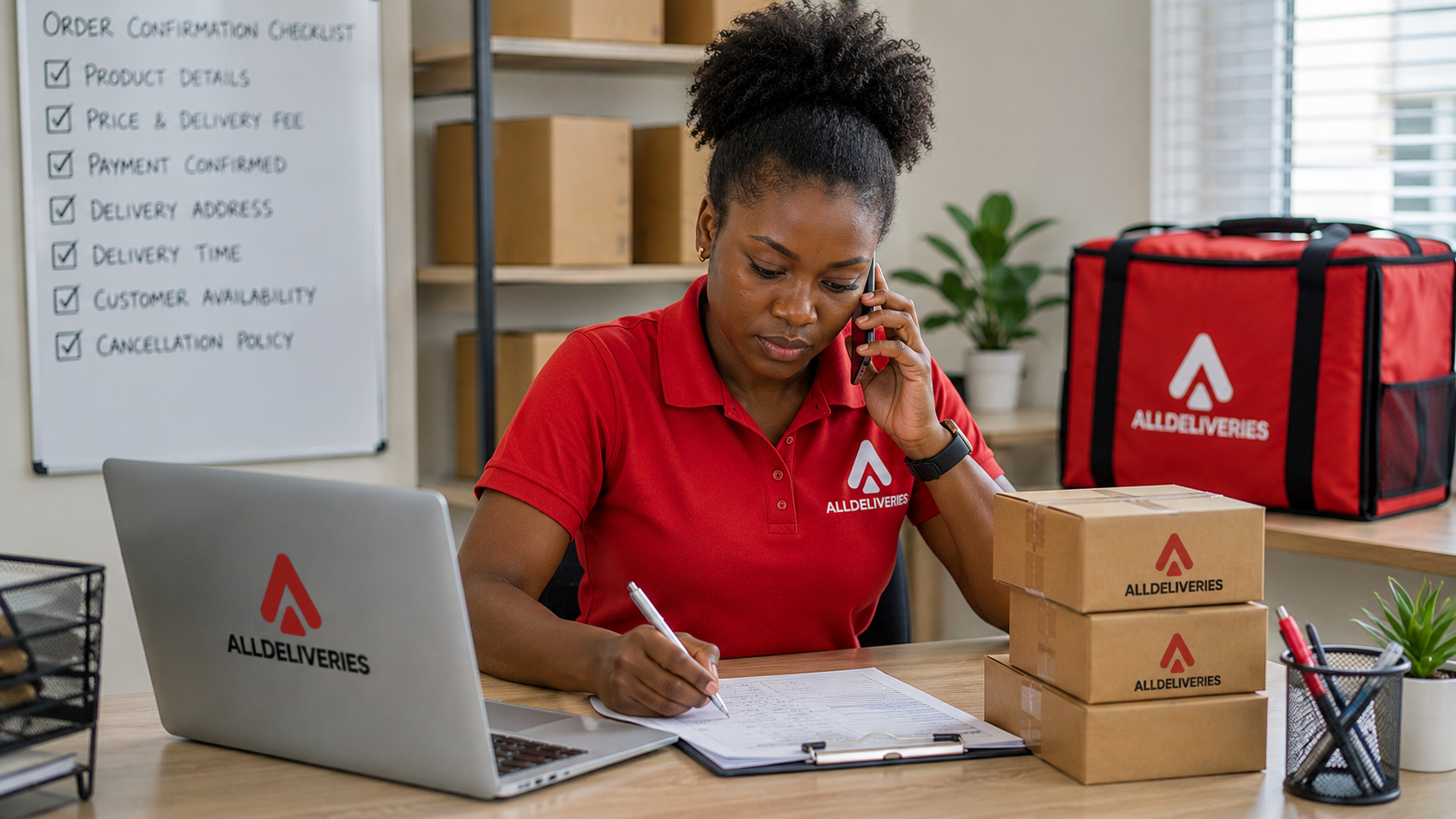
Every order should pass through a simple checklist before dispatch:
1. Product confirmed
2. Price confirmed
3. Delivery fee accepted
4. Payment verified
5. Address checked
6. Customer available
7. Cancellation terms understood
This process does not need to be complicated. It only needs to be followed consistently.
You can also download the AllDeliveries mobile app to arrange deliveries conveniently from your phone.
For more practical logistics and business-growth advice, visit the AllDeliveries Blog.
Frequently Asked Questions
Why do customers cancel orders before delivery?
Common reasons include unexpected delivery charges, long delivery times, payment concerns and changes in availability.
Can businesses charge cancellation fees?
Yes, where the terms were clearly explained before payment and the business has already incurred reasonable costs.
Should payment be confirmed before packaging?
Yes, especially for customised, expensive or long-distance orders.
Can deposits reduce cancellations?
A reasonable deposit may reduce unserious orders and cover part of the business’s preparation or delivery expenses.
What should businesses do with repeated cancellations?
Record the reasons and improve the ordering, payment or delivery process where patterns appear.
Comments
No comments yet. Be the first to comment.