A customer places a large order, requests urgent delivery and insists on paying when the package arrives. Your team prepares the parcel, pays the rider and sends it across town.
When the rider reaches the address, the phone number is switched off. The location is incomplete, nobody recognises the customer and the parcel returns to your business.
The sale never existed, but the delivery and packaging costs were real.
Services You May Like
Fake orders, false payment alerts and dishonest delivery claims can quietly reduce business profit. While every customer should be treated respectfully, businesses also need simple verification steps that prevent avoidable losses.
Verify New Customers Before Dispatch
First-time customers may require additional confirmation, especially when the order is expensive, customised or being sent over a long distance.
Before dispatch, confirm:
1. Customer’s full name
2. Active phone number
3. Complete delivery address
4. Nearby landmark
5. Product and quantity ordered
6. Preferred delivery time
7. Person authorised to receive the parcel
Call the customer where necessary. A short conversation can reveal incorrect details before your business pays for packaging and transportation.
Address verification is particularly important. Our guide on how to prevent wrong delivery addresses explains how to collect clearer information before dispatch.
Confirm Payments Properly
Never rely only on screenshots or forwarded debit alerts.
Check your bank account, payment dashboard or official transaction record before marking an order as paid. Fraudsters can edit screenshots, send fake alerts or claim that a delayed transfer will appear later.
Your team should know that an order is not paid until the money is confirmed through your recognised payment channel.
For large orders, record the transaction reference and customer details. This makes later investigation easier if a dispute occurs.
Be Careful With Pay-on-Delivery Orders
Pay on delivery can attract genuine customers who are cautious about online shopping, but it also creates risk.
A customer may reject the parcel, become unreachable or claim they no longer need the product after the rider has travelled to the location.
Businesses can reduce this risk by:
1. Requesting a delivery deposit
2. Limiting pay on delivery to selected locations
3. Confirming the order by phone
4. Excluding customised products
5. Setting a maximum order value
6. Clearly stating return and redelivery charges
Customers should understand these conditions before the parcel leaves your business.
A clear delivery policy helps explain payment, failed-delivery and redelivery rules without creating confusion.
Watch for Suspicious Order Behaviour
Not every urgent or unusual order is fraudulent, but certain patterns deserve attention.
Be cautious when a customer:
1. Refuses to provide a complete address
2. Changes the delivery location repeatedly
3. Uses several different phone numbers
4. Requests an unusually large first order
5. Sends an unclear payment screenshot
6. Pressures your team to dispatch before payment confirmation
7. Asks the rider to hand the parcel to an unidentified person
Do not accuse the customer immediately. Politely request the missing information and explain that verification protects both parties.
A genuine customer will usually cooperate with reasonable checks.
Use Proof of Delivery
A dishonest customer may receive a package and later claim it never arrived.
Proof of delivery helps your business investigate such claims. Depending on the order, collect the recipient’s name, signature, confirmation code, delivery time or photograph of the parcel at the agreed handover point.
The rider should also confirm whether the customer received the parcel personally or authorised someone else.
This is especially important for expensive products. Read why proof of delivery matters to understand how proper documentation reduces disputes and duplicate refunds.
Keep Order and Delivery Records
Fraud is easier to identify when records are organised.
Maintain a simple history containing:
1. Customer’s contact details
2. Products ordered
3. Payment method
4. Delivery address
5. Rider assigned
6. Delivery outcome
7. Failed attempts
8. Complaints or disputes
Repeated fake orders may come from the same phone number, location or customer name. Good records allow your team to identify patterns before another parcel is sent.
Our article on how delivery records help businesses grow explains how these records can also improve planning and customer service.
Train Your Team to Follow One Process
Fraud often succeeds when staff members make exceptions under pressure.
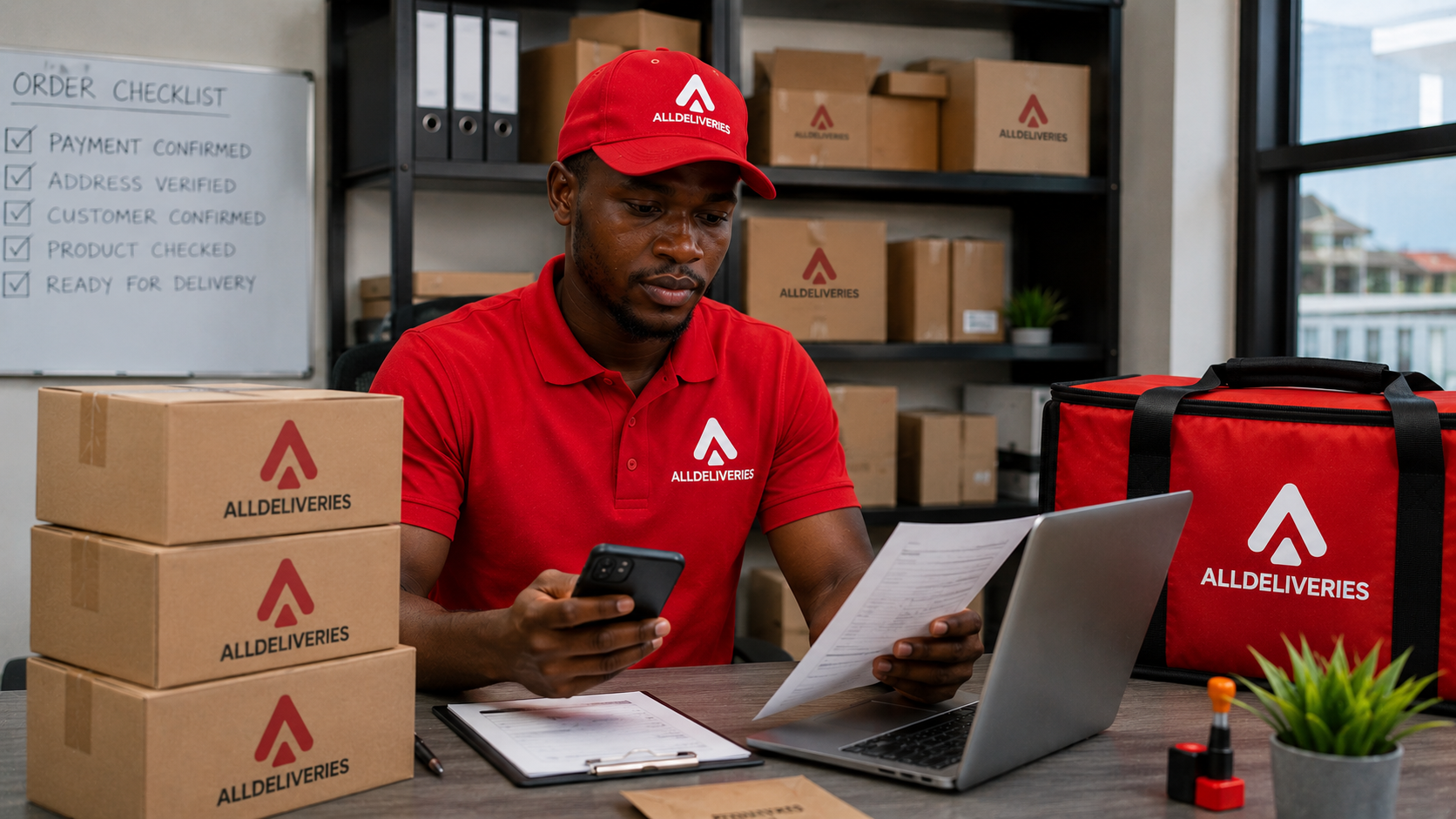
Create a simple checklist that every order must pass before dispatch:
1. Payment confirmed
2. Product checked
3. Address verified
4. Customer reachable
5. Delivery fee accepted
6. Recipient confirmed
7. Order recorded
Do not skip these steps because a customer says the order is urgent.
Once the order has been verified and properly prepared, book a delivery through AllDeliveries and provide accurate recipient information.
You can also download the AllDeliveries mobile app to arrange deliveries conveniently from your phone.
For more practical logistics and business-growth advice, visit the AllDeliveries Blog.
Frequently Asked Questions
How can a business identify a fake order?
Warning signs include incomplete addresses, unreachable phone numbers, suspicious payment evidence and pressure to dispatch without verification.
Are all pay-on-delivery orders risky?
No, but businesses should confirm customers, set clear conditions and consider requesting a deposit for high-value orders.
Is a payment screenshot enough?
No. Payment should be confirmed through the business’s bank account or recognised payment platform.
Can proof of delivery prevent fraud?
It cannot prevent every case, but it provides evidence that helps resolve false non-delivery claims.
Should businesses block customers who make fake orders?
Businesses may restrict future orders after verifying that a customer repeatedly provides false information or causes intentional losses.
Comments
No comments yet. Be the first to comment.