A business receives 30 orders after running a successful promotion. Some customers ordered the same product in different colours, others requested multiple items, and several deliveries are going to nearby locations.
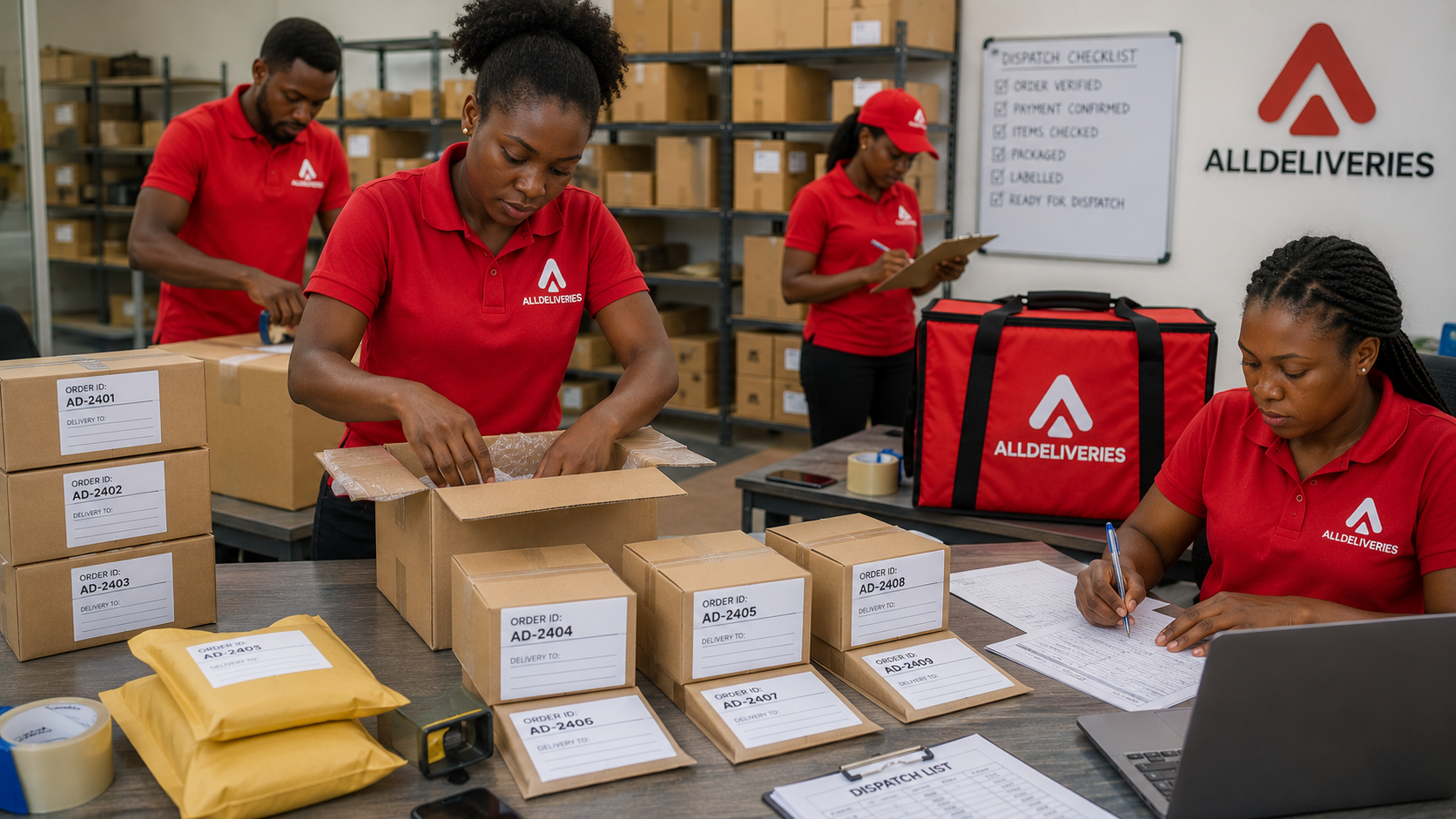
The sales look impressive, but one simple mistake can create serious problems.
A parcel may be sent to the wrong customer. An item may be missing. Two packages may be exchanged. A rider may leave with an order that has not been fully checked.
Services You May Like
Bulk deliveries require more organisation than ordinary dispatch. As order volume increases, relying on memory, scattered WhatsApp messages or handwritten notes becomes risky. A clear preparation system helps your business reduce errors, save time and protect customer trust.
Give Every Order a Unique Reference
Every order should have a simple reference number before packaging begins.
The reference may include the date and a short number, such as:
1. AD-2401
2. AD-2402
3. AD-2403
Use the same reference on the order record, package label, payment confirmation and delivery list. This makes it easier to identify each parcel without opening it repeatedly.
When a customer asks for an update, your team can locate the order quickly instead of searching through names and messages.
Accurate references also strengthen the record-keeping practices explained in how delivery records can help your business grow.
Separate Order Checking From Packaging
Do not package products immediately after picking them from storage.
First, place each customer’s complete order in a separate area and compare it with the original request. Confirm the product, colour, size, quantity and any special instructions.
A second team member should check high-value or complicated orders where possible.
Only seal the package after the contents have been verified. This prevents your staff from repeatedly opening parcels because they are unsure what was included.
For valuable items, photograph the order before sealing it. This provides evidence of the product’s condition and contents before dispatch.
Label Every Parcel Clearly
A properly sealed package is still risky when the label is incomplete.
Each parcel should show the customer’s:
1. Full name
2. Active phone number
3. Delivery address
4. Nearby landmark
5. Order reference
6. Special handling instruction
Avoid writing sensitive product information on the outside of the parcel. For expensive items, use plain external packaging while keeping the identifying details clear.
The label should be securely attached and protected from rain or tearing.
Businesses delivering during wet weather should also follow the packaging advice in how bad weather can disrupt deliveries.
Arrange Orders by Location and Priority
Do not place every package in one large pile.
Separate orders according to delivery area, urgency and product type. For example, you may create groups for:
1. Same-day urgent deliveries
2. Same-day flexible deliveries
3. Next-day deliveries
4. Nationwide parcels
5. Fragile products
6. Perishable items
Orders going to nearby locations may sometimes be grouped into the same route. However, urgent, fragile or temperature-sensitive products should not be delayed simply to reduce transport costs.
Our guide on how to plan multiple deliveries without delaying customers explains how to organise routes more effectively.
Once the orders are checked, labelled and arranged, you can book a delivery through AllDeliveries and provide the correct details for each recipient.
Confirm Customers Before Dispatch
Bulk dispatch should never mean sending parcels without final confirmation.
Before the rider leaves, confirm that each customer’s address is correct and that someone will be available to receive the order. This is particularly important for offices, gated estates and expensive deliveries.
Send a short message such as: “Your order is ready for dispatch. Please confirm that you or an authorised person will be available between 2 p.m. and 4 p.m.”
A customer who has travelled or changed location can provide updated information before the rider begins the journey.
Following the process in how to confirm customer availability before delivery can significantly reduce failed attempts.
Use a Dispatch Checklist
Before handing parcels to the rider, compare every package with the dispatch list.
Confirm:
1. Order reference matches the parcel
2. Customer details are correct
3. Payment status is confirmed
4. Package is properly sealed
5. Special handling instructions are visible
6. Delivery route is assigned
7. Customer availability is confirmed
The rider should acknowledge the number of parcels collected. Your team should also record which rider received each order and the pickup time.
These records help resolve disputes when a customer reports a missing or delayed parcel.
Review Mistakes After Every Bulk Dispatch
Once the deliveries are completed, review the outcome.
Check whether any order was delayed, returned, damaged or delivered to the wrong recipient. Identify why the problem occurred and update your process.
Repeated errors may indicate weak labelling, poor order verification or unclear rider instructions.
Bulk delivery performance should improve with every campaign. The goal is not only to complete more deliveries but to complete them accurately.
You can also download the AllDeliveries mobile app to arrange deliveries conveniently from your phone.
For more practical delivery and business-growth advice, visit the AllDeliveries Blog.
Frequently Asked Questions
How can businesses prevent orders from being mixed up?
Use unique order references, separate customer orders during preparation and label every parcel clearly.
Should bulk deliveries be grouped by location?
Yes, when grouping will not delay urgent orders or affect fragile and perishable products.
Is a dispatch checklist necessary?
Yes. It helps confirm that every parcel is complete, labelled and assigned to the correct rider.
Should customers be contacted before bulk dispatch?
Yes. Confirm their address, phone number and availability before the rider leaves.
What records should be kept?
Keep the order reference, customer details, payment status, rider assigned, pickup time and delivery outcome.
Comments
No comments yet. Be the first to comment.