A customer places an order, pays successfully and then asks three questions: “When will it arrive?”, “What happens if I am not available?” and “Who pays if the rider has to come back?”
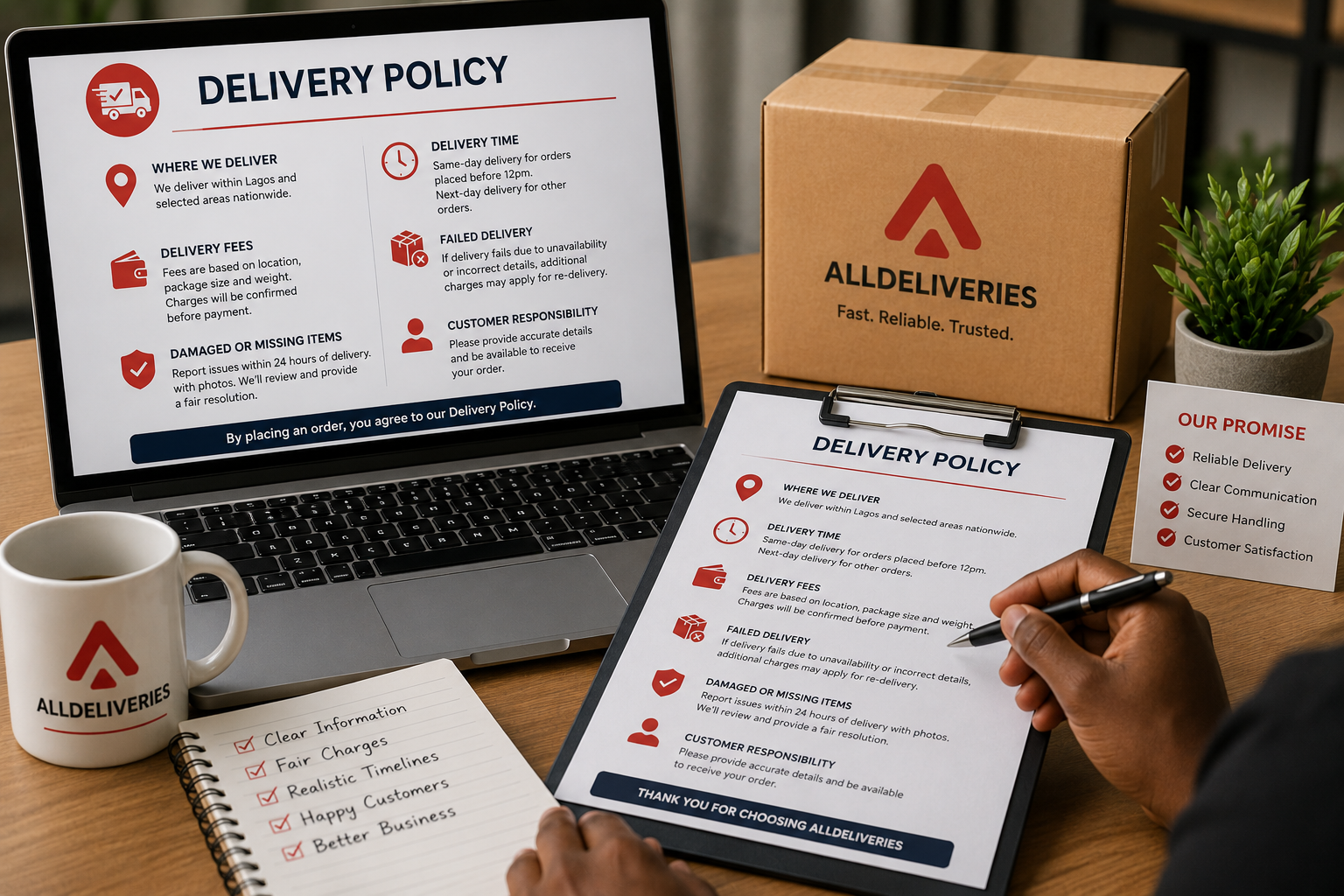
If your business does not already have clear answers, every delivery becomes a fresh negotiation.
This is where many online businesses lose time and customer trust. Delivery terms are often scattered across WhatsApp chats, Instagram captions and voice notes. As a result, customers may misunderstand delivery fees, timelines, redelivery charges or return conditions.
Services You May Like
A clear delivery policy removes this confusion. It tells customers what to expect before they pay and gives your team a consistent process to follow.
Explain Where You Deliver
Start by stating the locations your business currently serves.
You may offer delivery within your city, to nearby states or nationwide. Avoid using broad promises such as “We deliver everywhere” unless you can genuinely support every location.
You should also explain whether some areas attract higher delivery fees or longer timelines.
This helps customers understand the limits of your service before placing an order and reduces disputes later.
When a package is ready, you can book a delivery through AllDeliveries based on the parcel type and destination.
State Delivery Timelines Clearly
Avoid vague phrases such as “delivery soon” or “your order is on the way” without a realistic timeframe.
Your policy should explain the difference between:
1. Same-day delivery
2. Next-day delivery
3. Scheduled delivery
4. Nationwide delivery
5. Delivery during promotions or busy periods
You should also state the time by which an order must be confirmed to qualify for same-day dispatch.
Our guide on same-day versus next-day delivery can help you decide which timelines are realistic for your business.
The aim is not to promise the fastest delivery. It is to promise what you can consistently achieve.
Make Delivery Fees Easy to Understand
Customers should know how delivery fees are calculated before checkout.
Explain whether charges depend on distance, package size, weight, urgency or destination. If the exact fee cannot be displayed immediately, tell customers when and how it will be confirmed.
Your policy should also cover additional charges that may apply when:
1. The customer changes the address
2. The rider waits for too long
3. A second delivery attempt is required
4. The package is unusually heavy or bulky
The article on how to set delivery fees without scaring customers away explains how to communicate these costs more clearly.
Explain What Happens When Delivery Fails
A customer may be unavailable, unreachable or provide an incomplete address. Your policy should explain what happens in these situations.
State whether the package will be returned, kept for redelivery or taken to another agreed recipient. You should also explain who pays for a second delivery attempt.
This protects your business from repeated losses and prevents customers from claiming they were never informed.
To reduce these situations, follow the practical steps in how to prevent wrong addresses from ruining deliveries.
Include Rules for Damaged or Missing Orders
Customers need to know what to do if a parcel arrives damaged or incomplete.
Your policy should explain:
1. How quickly complaints must be reported
2. Whether photographs or videos are required
3. Who investigates the issue
4. When replacements or refunds may be considered
5. Whether damaged packaging should be kept
The policy should be fair, simple and easy to follow.
You should also ensure products are properly protected before dispatch. Read how good packaging can save your business money for practical packaging advice.
Write the Policy in Simple Language
A delivery policy should not sound like a complicated legal document.
Use short sentences and clear headings. Customers should be able to scan it quickly and understand their responsibilities.
Avoid technical expressions where simple words will do.
For example, instead of saying “The merchant shall not be liable for unsuccessful fulfilment arising from inaccurate recipient details.”
Say: “Please confirm your address and phone number before dispatch. Additional delivery charges may apply if the details are incorrect.”
The second version is easier to understand and less likely to create confusion.
Make the Policy Easy to Find
Do not hide your delivery policy where customers cannot see it.
Place it on your website, checkout page, product pages or order-confirmation messages. You can also send a short version through WhatsApp before payment.
Ask customers to read and accept the terms before dispatch, especially for expensive, fragile or nationwide orders.
For more practical logistics and business advice, visit the AllDeliveries Blog.
You can also download the AllDeliveries mobile app to access delivery services conveniently from your phone.
Frequently Asked Questions
What is a delivery policy?
A delivery policy explains delivery locations, timelines, fees, failed-delivery rules and how complaints are handled.
Why does a small business need one?
It reduces misunderstandings, saves time and gives customers clear expectations before they pay.
Should redelivery charges be included?
Yes. Customers should know who pays when another delivery attempt becomes necessary.
Where should the policy be displayed?
It can appear on your website, checkout page, order form, social media highlights or WhatsApp confirmation message.
Should customers agree to the policy before dispatch?
Yes, especially when the order is expensive, fragile, urgent or travelling a long distance.
Comments
No comments yet. Be the first to comment.