Lagos is one of Nigeria's busiest commercial centres, and the movement of goods is an important part of everyday business. From online orders and food deliveries to documents, electronics, fashion items, and other products, thousands of deliveries move across the city every day.
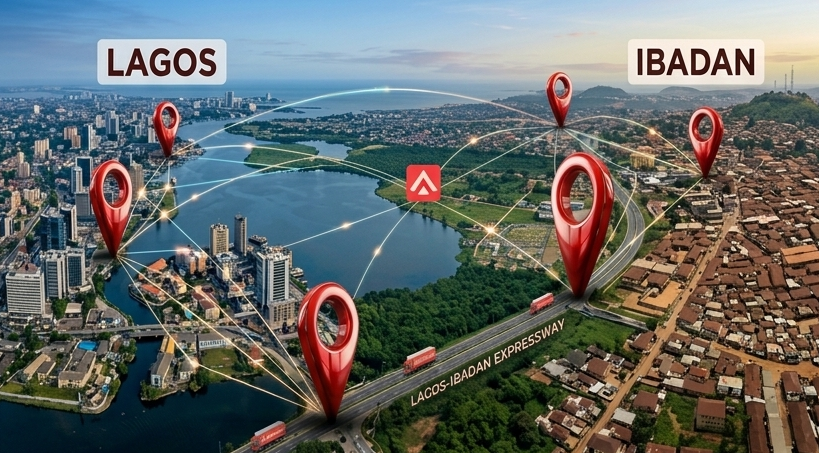
However, traffic congestion can make delivery times difficult to predict. A journey that would normally take a short time can become much longer when roads are heavily congested. Research on Lagos logistics has found that traffic congestion is one of the factors affecting delivery timeliness, alongside infrastructure, loading constraints, and other operational challenges.
For businesses, the effect goes beyond delayed packages. Traffic can increase fuel consumption, reduce the number of deliveries a rider or driver can complete, increase operating costs, and affect customer satisfaction.
Services You May Like
Understanding how Lagos traffic affects deliveries can help businesses create more realistic delivery schedules and improve their operations.
1. Traffic Makes Delivery Times Less Predictable
One of the biggest problems caused by Lagos traffic is uncertainty.
A delivery route may appear straightforward, but conditions can change significantly during the day. Congestion, accidents, road restrictions, construction, or heavy vehicle movement can affect the time required to complete a journey.
This makes it difficult for businesses to guarantee an exact delivery time.
Instead, businesses should provide realistic delivery windows that allow for normal traffic variations.
2. Peak Periods Can Cause Longer Delays
Traffic conditions are often more challenging during busy periods when large numbers of people are travelling to and from work, school, markets, and other destinations.
For delivery businesses, this means the time at which an order is dispatched can affect when it reaches the customer.
Businesses can reduce delays by:
- Planning deliveries around expected traffic conditions.
- Allowing extra time during busy periods.
- Avoiding unrealistic express-delivery promises.
- Scheduling non-urgent deliveries when roads are less congested.
- Monitoring traffic conditions before dispatch.
The aim is not always to avoid traffic completely, but to plan around predictable congestion where possible.
3. Traffic Increases Fuel Consumption
Vehicles and motorcycles that spend long periods moving slowly or remaining stationary can consume fuel without covering much distance.
For businesses handling multiple deliveries, this can increase operating costs.
Traffic-related fuel expenses can eventually affect:
- Delivery charges.
- Product prices.
- Courier costs.
- Profit margins.
Efficient route planning can help reduce unnecessary travel and limit the amount of time delivery vehicles spend in congested areas.
4. Traffic Can Reduce the Number of Daily Deliveries
A driver or rider can only complete a limited number of deliveries within a working day.
When one delivery takes significantly longer than expected, subsequent deliveries may also be delayed.
For example, if a courier plans to complete several deliveries across different parts of Lagos but becomes stuck in severe congestion on an early route, the remaining customers may have to wait longer.
This can reduce overall delivery productivity.
5. Traffic Affects Customer Satisfaction
Customers usually care about receiving their orders within the timeframe promised by the business.
When traffic causes significant delays, customers may become frustrated, particularly if they have not been informed about the situation.
Delayed deliveries can affect customer satisfaction and may contribute to complaints, cancellations, or customers choosing another business.
Businesses should therefore communicate with customers when traffic causes a substantial change to the expected delivery time.
6. Some Routes Are More Difficult Than Others
Traffic conditions can vary significantly between different parts of Lagos.
A delivery between two nearby locations can still take considerably longer than expected if the route depends on a congested road, bridge, major junction, or busy commercial corridor.
Businesses should avoid assuming that distance alone determines delivery time.
Instead, route planning should consider the road conditions and expected traffic situation.
7. Road Incidents Can Cause Unexpected Delays
Traffic conditions can change quickly when an accident, vehicle breakdown, road obstruction, or other incident occurs.
A route that was moving normally when a package was dispatched may become heavily congested later.
These unexpected events are one reason businesses should avoid promising delivery times that leave no room for delays.
Having alternative routes and keeping customers informed can help reduce the effect of unexpected disruptions.
8. Heavy Vehicles Can Affect Delivery Routes
Large trucks and other heavy vehicles can contribute to congestion on important commercial routes.
This can be particularly challenging for businesses moving goods between warehouses, markets, ports, and customers.
Recent congestion around the Mile 2 and Oshodi-Apapa corridor, for example, has demonstrated how truck-related road blockages can significantly affect movement and cause journeys to take much longer than usual.
Businesses operating around such corridors should take traffic conditions into account when planning deliveries.
9. Road Closures Can Disrupt Normal Delivery Plans
Road closures and temporary restrictions can force delivery personnel to use alternative routes.
When many vehicles are redirected to the same alternative roads, those routes can also become congested.
For businesses, this means a previously familiar delivery route may not always be the best option.
Monitoring current road conditions and allowing additional travel time can help delivery teams respond more effectively.
10. Traffic Can Affect Same-Day Delivery
Same-day delivery can be attractive to customers, but it requires careful planning in a busy city like Lagos.
If an order is received late in the day, there may not be enough time to prepare and deliver it before traffic becomes heavier.
Businesses offering same-day delivery should consider:
- Order processing time.
- Customer location.
- Courier availability.
- Current traffic conditions.
- Distance between deliveries.
- Expected traffic during the remaining delivery period.
Same-day delivery should only be promised when the business has a realistic ability to complete it.
11. Route Planning Can Reduce Delays
Good route planning can help businesses make better use of available time.
When several orders need to be delivered, consider grouping customers based on location rather than sending a driver repeatedly across different parts of the city.
For example, deliveries within nearby areas can be organised into the same route where practical.
This can reduce unnecessary movement and improve delivery efficiency.
12. Real-Time Traffic Information Can Help
Traffic conditions can change quickly, so relying entirely on a fixed route planned earlier in the day may not always be effective.
Where available, businesses can use real-time traffic information to identify congestion and consider alternative routes.
Delivery personnel should still use their judgement because the fastest route shown at one moment may change as traffic conditions develop.
13. Customers Should Receive Realistic Delivery Estimates
One of the best ways to manage traffic-related delays is to set realistic expectations from the beginning.
Instead of promising that every Lagos delivery will arrive at an exact time, businesses can provide an estimated delivery window.
For example, a business can explain that delivery may take longer depending on the customer's location and traffic conditions.
Clear expectations make it easier for customers to understand occasional delays.
14. Keep Customers Updated During Major Delays
When traffic causes a significant delay, customers should be informed.
A simple update can explain that the delivery is still on the way and that traffic has affected the expected arrival time.
This is better than allowing customers to wait without knowing what is happening.
Good communication can help maintain trust even when the business cannot control the traffic situation.
15. Choose Delivery Partners Familiar With Lagos Routes
Local knowledge can be valuable when navigating Lagos.
Experienced delivery personnel may have a better understanding of different areas, common congestion points, alternative routes, and difficult delivery locations.
When choosing a delivery partner, consider:
- Experience in Lagos.
- Knowledge of delivery areas.
- Reliability.
- Tracking capabilities.
- Communication.
- Package-handling practices.
A delivery partner should be able to adapt when normal routes become difficult.
16. Confirm Customer Addresses Before Dispatch
Traffic is not the only factor that can cause delivery delays.
An incomplete address or difficult-to-locate destination can add unnecessary time to a delivery that is already affected by congestion.
Before dispatch, confirm:
- Customer's full name.
- Active phone number.
- Complete address.
- Area or neighbourhood.
- Estate or building name where applicable.
- Useful landmarks.
- Special delivery instructions.
Accurate information helps the courier find the destination more efficiently.
17. Consider the Type of Delivery Vehicle
The type of vehicle used can affect how easily a delivery can move through certain areas.
For smaller packages, a motorcycle may be more practical in some congested areas, while larger products may require a car, van, or other suitable vehicle.
The vehicle should be selected based on:
- Package size.
- Package weight.
- Delivery distance.
- Road conditions.
- Product type.
- Applicable safety and operational requirements.
Common Mistakes Businesses Should Avoid When Dealing With Lagos Traffic
Businesses should avoid:
- Promising exact delivery times without considering traffic.
- Ignoring peak traffic periods.
- Sending multiple deliveries without proper route planning.
- Failing to confirm customer addresses.
- Keeping customers uninformed about major delays.
- Choosing delivery partners based only on price.
- Ignoring alternative routes.
- Accepting more same-day orders than the delivery operation can realistically handle.
- Failing to account for traffic-related operating costs.
Avoiding these mistakes can make delivery operations more predictable and efficient.
Benefits of Planning Around Lagos Traffic
More Reliable Delivery Times
Allowing for traffic conditions can help businesses provide more realistic delivery estimates.
Lower Operating Costs
Better route planning can reduce unnecessary fuel consumption and travel.
Higher Customer Satisfaction
Customers are more likely to appreciate a business that communicates clearly and provides realistic expectations.
More Efficient Delivery Operations
Couriers can complete more deliveries when routes and schedules are properly organised.
Fewer Failed Deliveries
Accurate addresses and better communication can reduce unnecessary repeat trips.
Final Thoughts
Lagos traffic can have a significant effect on delivery times, operating costs, and customer satisfaction. Congestion, road incidents, heavy vehicle movement, and unexpected route disruptions can all make delivery times difficult to predict. Research also identifies traffic congestion as an important factor affecting delivery timeliness in Lagos.
Businesses cannot control traffic, but they can control how they prepare for it.
By planning routes carefully, using realistic delivery windows, confirming customer information, monitoring traffic conditions, choosing reliable delivery partners, and communicating delays promptly, businesses can reduce the impact of congestion on their delivery operations.
For businesses serving customers across Lagos, good delivery planning is not simply about finding the shortest route. It is about understanding the city's traffic realities and building enough flexibility into the delivery process to handle them.
Comments
No comments yet. Be the first to comment.